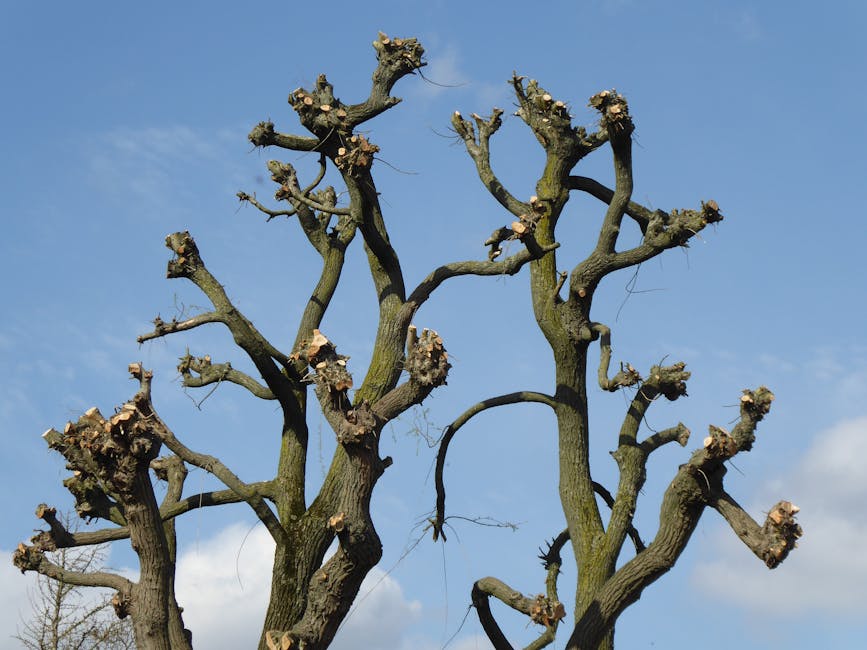
What to know about Bromley Council rules for tree work in Beckenham
If you are planning tree pruning, crown reduction, stump removal, or a full tree felling job in Beckenham, the first thing to understand is this: not every tree can be worked on freely. Bromley Council rules for tree work in Beckenham can affect whether you need permission, what you can cut, how much notice to give, and what happens if a tree is protected. That can sound a bit heavy at first, but once you know the basics, the process becomes much easier to handle.
Truth be told, most problems happen when people assume a tree sits on private land, so it must be fair game. Sometimes it is. Sometimes it definitely is not. The difference often comes down to Tree Preservation Orders, conservation area controls, and the way the work is described. This guide walks you through the practical side of it all, in plain English, so you can plan confidently and avoid expensive mistakes.
For broader garden planning around tree work, it can also help to look at our services overview and our tree lopping and removal service if you need hands-on help with the work itself.
Table of Contents
- Why these council rules matter
- How the rules work in practice
- Key benefits and practical advantages
- Who needs this guidance and when
- Step-by-step guidance
- Expert tips for better results
- Common mistakes to avoid
- Tools, resources and recommendations
- Law, compliance, standards, or best practice
- Options, methods, or comparison table
- Case study or real-world example
- Practical checklist
- Conclusion
- Frequently asked questions
Why What to know about Bromley Council rules for tree work in Beckenham Matters
Tree work looks straightforward until regulation enters the picture. In Beckenham, a simple trim can become a permission issue if the tree is protected, sits within a conservation area, or is subject to planning conditions. That matters because tree damage is often permanent. Once a mature limb is removed badly, or a root system is disturbed, you cannot simply put it back. The canopy may take years to recover, and in some cases the whole tree declines faster than expected.
It also matters for neighbours. A tree can overhang a boundary, drop leaves into gutters, or block light, but that does not automatically give anyone the right to cut it back at will. If the tree is protected, the council may want to know before any work starts. If the work is carried out without the right checks, you could be dealing with complaints, delays, or enforcement action. Not ideal, obviously.
There is another reason this topic is important: good tree management is about more than compliance. It is about safety, wildlife awareness, and sensible long-term care. A mature oak, lime, plane, or horse chestnut needs a different approach from a young ornamental tree. The rules are there to prevent careless work, but they also help preserve Beckenham's green character. That is a real local benefit, not just paperwork.
If your project involves more than just a light tidy-up, it may sit alongside other garden work such as hedge shaping, boundary clearance, or general seasonal maintenance. In those cases, coordinating the whole job can save time and reduce the chance of one contractor doing work that blocks another stage later on. Our hedge trimming and garden maintenance pages can help if your tree work forms part of a wider garden plan.
How What to know about Bromley Council rules for tree work in Beckenham Works
The basic idea is simple: before tree work begins, you need to know whether the tree is protected or subject to special controls. In Bromley, that usually means checking three things. First, whether the tree has a Tree Preservation Order, often shortened to TPO. Second, whether the property is in a conservation area. Third, whether there are planning conditions or covenants affecting the tree. That sounds like a lot, but in practice the first two are the big ones for most homeowners.
A TPO is a legal protection placed on a tree or group of trees because of their public amenity value. If a tree has a TPO, you generally need permission before carrying out work such as felling, topping, lopping, uprooting, or pruning beyond what is normally considered maintenance. Conservation areas work a little differently. In many cases, you may need to give notice before doing work on a tree that is not already exempt. The council then has a chance to review the proposal.
What does that mean for you day to day? It means you should not hire someone and start cutting first, checking later. A responsible approach is to identify the tree, describe the work properly, and confirm whether any permission or notice is needed. If the tree surgeon asks questions about the tree's location, size, or condition, that is a good sign. They are trying to avoid trouble, not create it.
The type of work also matters. Light deadwood removal, formative pruning on young trees, or removing a broken branch after storm damage may be treated differently from major canopy reduction or complete removal. Councils tend to care not just about what you are doing, but why you are doing it and how much of the tree's structure will be affected. In other words, "trim it a bit" is not enough detail. Not by a long shot.
For jobs involving larger or awkward trees, skilled handling is key. You can read more about practical tree work options on our tree lopping and removal page, which is useful if the issue is not just permissions but also access, safety, or the condition of the tree itself.
Key Benefits and Practical Advantages
Following the council process properly may feel slower, but it gives you several advantages. The first is peace of mind. If you know the work has been checked and agreed where necessary, you are far less likely to face a surprise objection after the ladder is up and the saw is running. That alone is worth a lot.
The second benefit is better tree care. Good arboricultural decisions are rarely about removing as much as possible. They are about removing the right amount, from the right place, at the right time. When the rules are respected, tree work is usually more thoughtful, which helps the tree stay healthy and stable for longer.
The third benefit is neighbour relations. A well-planned process makes it easier to explain what is happening if branches touch a boundary or shade becomes an issue. People tend to be calmer when they know the work has been handled properly. You can almost feel the tension drop a little when someone says, "Yes, we've checked that first."
There is also a practical savings angle. Fixing mistakes can cost more than doing things properly from the start. If a protected tree is damaged, you may need specialist advice, remediation, or even replacement planting requirements. That is a lot of hassle for what might have started as a routine tidy-up.
For larger gardens or properties where tree work is part of a wider refresh, combining it with other improvements can be efficient. Our garden clearance service is useful where overgrowth, storm debris, or old material needs removing as part of the same visit. You may also want to review our recycling and sustainability approach if you are concerned about green waste handling.
Who This Is For and When It Makes Sense
This guidance is for homeowners, landlords, letting agents, property managers, and anyone who has responsibility for a tree in Beckenham. It is especially relevant if the tree is mature, near a boundary, visible from the street, or part of a garden that has a planning history. If you are the person likely to receive the complaint when a neighbour notices a branch coming down, yes, this is for you too.
It makes sense to pay attention whenever you are planning:
- crown lifting or thinning
- pollarding or reduction
- removal of dead, diseased, or storm-damaged wood
- complete tree removal
- root-related work near paving, sheds, or walls
- tree work as part of a landscaping project
It also matters if the tree is next to a driveway, close to a house, or interfering with cables, drains, or light. Those are the jobs where "just cutting it back" can go wrong quickly. A branch can look harmless until it is under tension, and then things become noisy, messy, and a bit more dramatic than planned.
If the tree is part of a bigger garden redesign, you might need to think beyond the single job. Sometimes tree work happens before new turf, border redesign, or structural changes. In those situations, it can help to coordinate with broader landscaping or landscape gardening work so the garden evolves in the right order.
Step-by-Step Guidance
If you want a sensible way to approach tree work in Beckenham, follow this sequence. It is not glamorous, but it works.
- Identify the tree clearly. Note its location, species if known, approximate height, and whether it sits near a boundary, road, or building.
- Check whether the tree is protected. Look for signs that it may be covered by a TPO or affected by a conservation area. If you are unsure, treat it as potentially protected until confirmed otherwise.
- Define the work properly. Be specific. Say whether you need pruning, reduction, deadwood removal, crown lifting, or removal. "Make it smaller" is not enough.
- Consider the tree's condition. Is it healthy, leaning, storm-damaged, diseased, or causing structural issues? This influences both the method and the likely council response.
- Get professional input if the job is not straightforward. A qualified tree specialist can help interpret the situation and avoid wording errors that slow things down.
- Check whether notice or consent is needed before work begins. Do not assume routine garden maintenance rules apply to protected trees.
- Plan access and waste removal. Think about parking, neighbours, equipment movement, and green waste disposal before the day arrives.
- Carry out the work carefully and document what was done. This is useful if anyone asks questions later.
A small but important point: if a tree has obvious safety issues, do not automatically assume that means no permission is needed. Emergencies can be treated differently, but you still need to act carefully and keep evidence of the problem. Photos taken before work begins can be useful. Quietly useful, actually.
For routine upkeep, it may also be worth combining tree checks with general garden care. A tidy plot makes issues easier to spot, and regular attention is usually less disruptive than waiting for things to become overgrown. Our lawn mowing service sits nicely alongside scheduled seasonal maintenance if you are trying to keep the whole garden under control.
Expert Tips for Better Results
In our experience, the best tree jobs are the ones that begin with restraint. Before you ask how much can be removed, ask what actually needs to be removed. That slight change in thinking can improve tree health and reduce future problems.
Here are a few practical tips that make a real difference:
- Use the correct terminology. Councils and contractors respond better to clear wording than to vague descriptions. "Reduce crown by 20%" is more useful than "trim it hard."
- Think in stages. If a tree is overgrown, it may be better to plan gradual reduction over time rather than one severe cut.
- Watch the season. Some trees cope better with work at certain times of year. Nesting birds, sap flow, and species-specific growth patterns all matter.
- Keep the tree's form in mind. A good prune preserves balance. A bad one can leave awkward regrowth and weak points.
- Do not ignore the roots. Root zone disturbance can matter just as much as canopy work, especially near paths, patios, and retaining walls.
One thing people often miss is that a "neat" finish is not always a healthy finish. A tree can look tidy and still have suffered. The aim is structure, not just appearance. To be fair, that is easy to forget when you are staring at a messy branch scraping the fence in the wind.
If the work is part of ongoing garden upkeep, use the moment to sort out surrounding issues too: poor access, broken fencing, tangled climbers, or debris that has built up over the years. A combined approach often gives the best visual result and the least future hassle. Our garden maintenance page is a good starting point for that bigger picture.
Common Mistakes to Avoid
There are a few repeat offenders when it comes to tree work and council rules. The first is assuming that ownership equals freedom. Even if the tree is on your land, protection may still apply. The second is describing the work too loosely. If your paperwork says one thing and the contractor does another, that can create avoidable issues.
Other common mistakes include:
- starting work before checking the tree's status
- treating severe cutting as routine maintenance
- ignoring boundary concerns until the neighbour complains
- forgetting that conservation areas can trigger notice requirements
- using an unqualified or uninsured operator for a risky job
- failing to keep records or photos of the tree before work
Another one, and it happens more than you would think, is rushing the decision because the branch is annoying. Yes, that low branch keeps brushing the shed roof. Yes, the silver birch drops catkins everywhere. But annoyance is not the same thing as permission. A calm check now can prevent a much less calm conversation later.
If the job is being carried out alongside other garden work, avoid mixing messages. For example, a clearance crew should not assume they can do structural tree work without separate checks. Keeping services and responsibilities clear is part of good practice, especially on larger sites. If you need support with the wider site tidy-up, our garden clearance service may help, but the tree itself still needs the correct review.
Tools, Resources and Recommendations
You do not need a cabinet full of specialist kit to get started, but you do need the right information. The most useful tools are often simple ones:
- a site plan or clear sketch of the tree location
- photos from several angles
- a tape measure or rough height estimate
- notes on nearby buildings, roads, fences, and utilities
- a written description of the exact work proposed
For actual tree work, the tools should match the task. Light pruning and deadwood removal require a different setup from a large reduction or sectional dismantle. That is one reason it is worth using a contractor with the proper equipment, training, and insurance rather than improvising with a ladder and a brave face. Let's be honest, ladders and overconfidence are not a charming combination.
On the paperwork side, make sure you know where your property documents are, especially if previous planning applications, tree notices, or boundary agreements exist. If you are managing a rented property, it is sensible to keep the landlord or managing agent in the loop as well.
We also recommend looking at service providers who are transparent about safety, waste handling, and payment terms. Our insurance and safety information and payment and security pages are useful if you want to understand how a professional garden company approaches risk and administration.
Law, Compliance, Standards, or Best Practice
Tree work in Beckenham is shaped by UK tree protection law, local planning control, and accepted arboricultural practice. The exact requirements depend on the tree, the site, and the kind of work being proposed. That is why careful checking matters more than assumptions. Where a TPO exists, the council's consent is typically required for work that would otherwise affect the tree's protected features. In conservation areas, advance notice may be needed before carrying out certain work.
Best practice also means doing the work in a way that supports long-term tree health. That includes making clean cuts, avoiding unnecessary wound size, respecting the natural shape of the species, and not overworking the tree in one go. A tree is a living structure, not a hedge. It responds over time, sometimes in ways that are not visible immediately.
Professional competence matters too. A proper contractor should be able to discuss risk, access, equipment, waste handling, and the likely effects of the work in plain terms. If they brush past those details, that is a yellow flag. Maybe not an emergency, but worth paying attention to.
For many homeowners, the safest approach is to treat any unusual, mature, or boundary-adjacent tree as a compliance question first and a cutting job second. That order saves trouble.
Options, Methods, or Comparison Table
Different tree situations call for different responses. Here is a simple comparison to help you think clearly before you book work.
| Approach | Best for | Typical advantage | Main caution |
|---|---|---|---|
| Light pruning | Minor shape correction or small overhang issues | Low disruption and easier to justify | Still needs status checks if the tree is protected |
| Crown thinning | Reducing density without changing the overall size much | Can improve light and wind movement | Over-thinning can weaken appearance and structure |
| Crown reduction | Trees that are too large for the space | Helps manage height and spread more sensitively than topping | Should be done carefully to avoid stress and poor regrowth |
| Deadwood removal | Safety and maintenance on mature trees | Good risk management with minimal visual impact | May still require notice or consent depending on tree status |
| Tree removal | Severe disease, damage, or unsuitable location | Solves the immediate issue fully | Most likely to need formal approval and replacement considerations |
In short, the more drastic the work, the more important it is to check the rules. If you are not sure which category your job fits into, ask before you start. It is much easier to adjust a proposal than to deal with an unauthorised job after the fact.
Case Study or Real-World Example
A typical Beckenham scenario goes something like this. A homeowner notices a mature tree in the rear garden is shading the kitchen and dropping small branches after windy nights. The tree looks healthy, but it has grown larger than expected and now sits close to a neighbour's fence. The first instinct is usually to "take the top off." That is exactly the point where a bit of patience pays off.
Instead of jumping straight in, the owner checks whether the tree is protected and whether the property sits within a conservation area. A tree specialist is then asked to assess whether crown reduction, selective pruning, or deadwood removal is more appropriate. The result is a smaller, clearer proposal that focuses on actual need rather than a dramatic cut. In many cases, that means the tree is retained, the light improves, and the risk of complaints goes down.
Now, imagine the same job handled in a rush. A contractor removes too much, the tree responds with dense regrowth, and the neighbour complains that the whole thing looks lopsided. Suddenly the job costs more, not less. The lesson here is simple, if a little unglamorous: good tree work is usually careful work.
This is also where professional coordination helps. If the garden needs tidying, waste removed, and perhaps a little redesign afterwards, the tree work can sit alongside broader preparation. That might mean pairing it with landscape gardening or sequencing it before other improvements. Small decisions like that can make the whole project feel calmer. And calmer is good.
Practical Checklist
Use this checklist before any tree work starts in Beckenham:
- Confirm the exact tree and its location
- Check for a TPO or conservation area status
- Write down the work you want done in plain terms
- Photograph the tree from several angles
- Note any visible safety concerns or storm damage
- Ask whether council consent or notice is needed
- Choose a contractor who understands local compliance
- Check insurance, access, and waste removal arrangements
- Keep records of what was agreed and what was completed
- Review nearby garden work that might be affected
If you can tick all of those off, you are in a far better position than most people who just want the tree "sorted." A little admin now saves a lot of bother later.
Conclusion
Understanding Bromley Council rules for tree work in Beckenham is really about one thing: making sensible decisions before anyone cuts a branch. Once you know whether the tree is protected, what kind of work is planned, and how the council expects it to be handled, the whole process becomes much more manageable. You protect the tree, protect yourself, and usually end up with a better result too.
The best outcomes tend to come from clear descriptions, careful checks, and a contractor who knows the difference between quick trimming and proper arboricultural work. That might sound obvious, but in the real world it is exactly where many jobs go off track. Do it properly, and you can keep the garden safe, attractive, and in good shape for years.
If you are weighing up tree work now, it is worth speaking to a local team that understands both the practical side and the compliance side. For a broader look at how we work, see our about us page or get in touch through our contact page when you are ready to talk through the details.
Get a free quote today and see how much you can save.
Small checks, good timing, and a steady hand can make all the difference. Funny how often that is true in gardening.
Frequently Asked Questions
Do I need permission to cut down a tree in Beckenham?
Not always, but you should never assume you can cut down a tree without checking first. If the tree has a TPO or is in a conservation area, permission or notice may be required before removal. The safest approach is to confirm the tree's status before any work starts.
What is a Tree Preservation Order?
A Tree Preservation Order is a legal protection placed on a tree or group of trees because of their public value. It usually means you need formal consent before carrying out work that affects the tree's structure or health.
What counts as tree work under council rules?
Tree work can include pruning, crown thinning, crown reduction, deadwood removal, felling, uprooting, and sometimes root disturbance. Even a job that looks minor may need checking if the tree is protected.
Can I trim branches overhanging my garden?
You may be able to trim overhanging branches, but only after making sure the tree is not protected and only if the work is reasonable. If the tree has a TPO or is in a conservation area, extra rules can apply. It is also sensible to avoid cutting beyond what is needed.
How do I know if my tree is in a conservation area?
The simplest way is to check the property's planning context before work begins or ask someone familiar with local tree controls. If you are unsure, treat the tree as potentially restricted until the position is confirmed.
What happens if I do tree work without permission?
If permission or notice was required and the work goes ahead anyway, you could face enforcement action, possible fines, or a requirement to make the situation right. It is a headache no one wants, so checking first is always better.
Is deadwood removal usually allowed?
Deadwood removal is often treated more leniently than major pruning or removal, especially when it is clearly for safety. Even so, protected trees can still require checks, so do not assume it is automatically exempt.
What is the difference between pruning and topping?
Pruning is selective cutting intended to support health, shape, or safety. Topping is a severe and generally poor-quality reduction of the upper canopy. Councils and tree professionals usually prefer proper pruning methods because they are less damaging.
How much does compliant tree work cost in Beckenham?
Costs vary depending on tree size, access, protection status, waste removal, and whether specialist consent or documentation is needed. There is no single standard price, and it is wiser to compare written quotes based on the same scope of work.
Should I hire a gardener or a tree specialist?
For simple garden tidying, a gardener may be suitable. For significant pruning, protected trees, large trees, or work near buildings and boundaries, a tree specialist is usually the better choice. Sometimes the right answer is both, working in sequence.
Can tree work be part of a larger garden project?
Yes, and that is often the most efficient way to do it. Tree work frequently sits alongside clearance, landscaping, hedge work, or lawn recovery. Planning the order of tasks properly can save time and help the whole garden settle into shape.
What should I ask a contractor before booking?
Ask whether they understand local tree protection rules, what exact work they recommend, how they handle safety and waste, and whether they are insured for the job. A good contractor should answer clearly without making everything sound more complicated than it needs to be.